Before You Buy an Emergency Survival Kit, Turn to Your Camping Gear
Are campers accidental preppers?
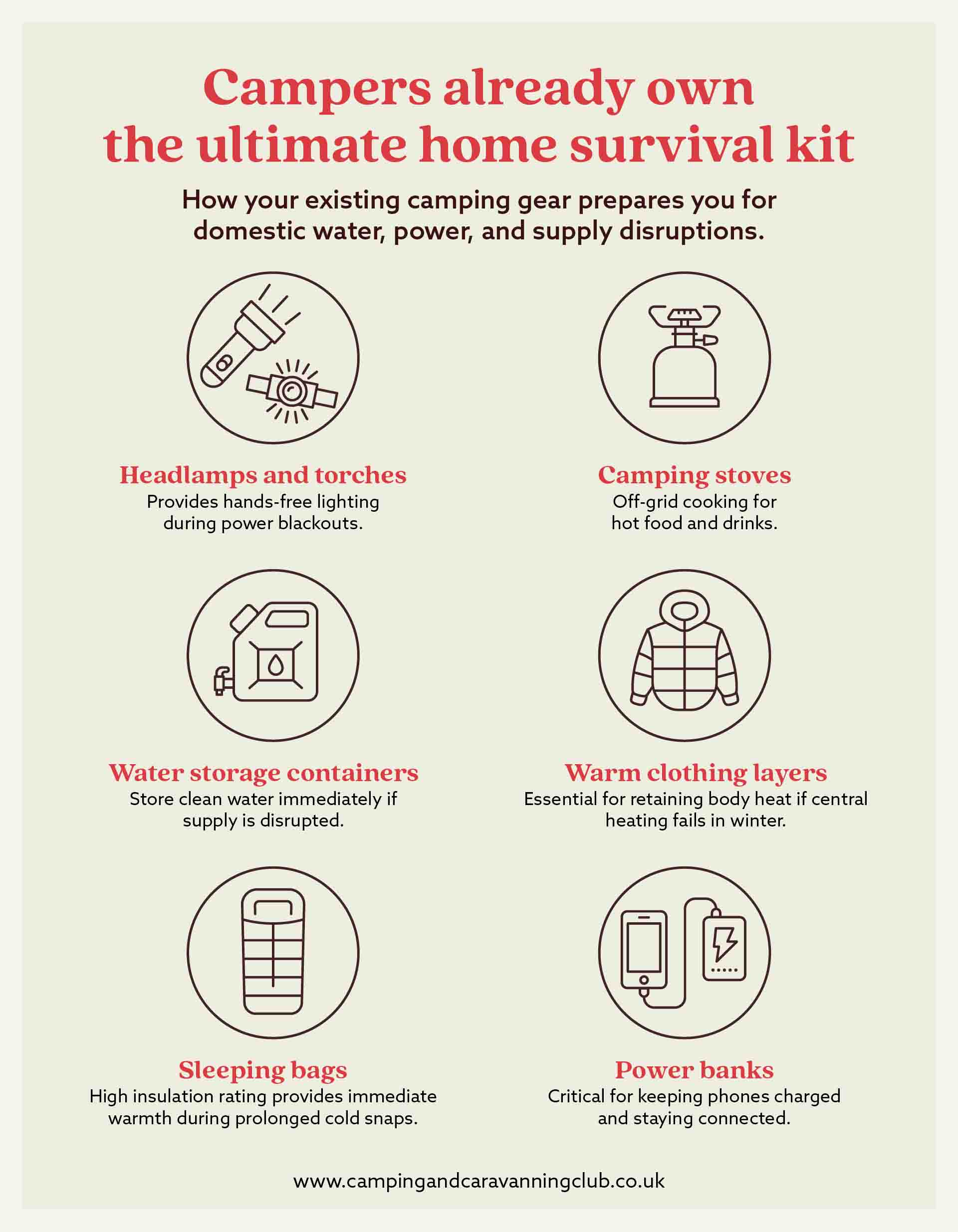
The UK government’s emergency readiness guidelines have sparked conversations about what we should keep at home. Given some of the kit you’ll already have, we think campers have an upper hand when it comes to being self-sufficient and prepared. Here’s how your camping gear is already a great base for the ultimate emergency kit.
💡Lighting: from pitching your unit to power blackouts
In the event of a power cut, reaching for camping lights and torches is a much safer option than lighting candles, especially around kids and pets. Bonus points for solar-powered or hand-crank options!
Headlamps and torches can be ideal for checking fuse boxes or navigating around your house in the dark.
LED camping lanterns are perfect for illuminating your living space with diffused lighting, rather than the harsh light of a torch.
On the lookout for new camping lighting? We’ve got you covered in our expert guide to camping lights.
🍳Cooking: off-grid meals on tap
Whether it’s stashed in a campervan on your drive or tucked away in a tent kit, your outdoor cooking gear is invaluable when mains gas and power go out.
Camping stoves allow you to boil water for hot drinks and cook warming meals in the event of any energy supply interruptions. View our expert guide to camping stoves.
⚠️Remember to never use your camping stove or barbecue in an enclosed indoor space due to the risk of carbon monoxide poisoning. Use your equipment outside, just like you would do on your camping holidays.
🛏️Warmth: comfort without power
Staying warm without central heating will be foreign to some, but not campers. Those of us used to spending time outdoors know how to layer to stay warm efficiently during cold spells. Some of our winter camping tips might be useful.
Sleeping bags can be used as well as duvets to better retain heat at night.
Layers including thermal base layers, fleeces and outer layers, paired with hats and gloves will come in handy.
Hot water bottles can be filled if you’ve got a camping stove to boil water.
🥛 Water: drinking and sanitation
The UK government are recommending that you stock water in your emergency kit, in case the fresh water supply goes down for any length of time. Water consumption awareness is something most campers will already have.
Food-grade water storage containers can be filled with tap water. If kept airtight in a cool, dark place, sealed tap water can remain safe to drink for up to 6 months.
Water filtration equipment, such as products on offer from LifeStraw, is a great backup option if drinking water were to run low.
Greywater management is something campers won’t shy away from. Any spare water, in a water butt for example, can be used to flush the toilet.
🪫Power: staying connected and charged
Keeping devices charged is one consideration if the power goes out but what about if the cellular network is congested or drops?
Radios in self-contained units can work short-term to listen to any news broadcasts if safe to do so. Many modern outdoor gadgets have built-in radios and both solar-power and hand-crank charging to ensure you’re never out of touch.
Power banks are brilliant for charging phones and other small electronic devices while camping. Keep them charged during the winter, just in case you find yourself without mains electricity.
Solar-powered camping gear, such as lights and chargers can be brilliant in the summer months but are much less efficient in wintery UK conditions. View our expert guide to solar power.
Campers emergency kit Q&A
Can I use a camping stove in my house during a power blackout?
No, using your camping stove inside your home poses a fire risk and exposes you to carbon monoxide which can be deadly. Only ever use your camping stove outdoors, with proper ventilation, away from anything that could catch fire.
What’s the safest way to light my home during a power blackout?
Torches and camping lights are much safer to use in your home rather than candles in a blackout due to the fire risk of open flames.
How can I keep my family warm without central heating?
Lean on the basic principles of camping with plenty of warm layers, including thermal base layers, topped with thicker clothing like jumpers and fleeces. You can also layer your sleeping bag inside your duvet for extra warmth at night.
If you have a camping stove, you’ll benefit from hot food and drinks and can also fill up hot water bottles.
How long can tap water be stored in a food-grade container?
Unopened, tap water stored in a food-grade container can last up to 6 months if stored in a cool dark place.
How can I keep my phone charged and stay updated if there’s a wide network outage?
Keep your power banks charged year-round, so you’ll never be caught short in a power cut. If phone signal becomes an issue, vehicle radios can be used in a pinch to tune into news broadcasts. If you have solar-powered chargers or radios, bear in mind that they won’t be as effective in the winter months.